Confession
Confession is defined as a formal admission of one's sins privately to a priest. It is essentially a Christian principle, but it carries a deeper spiritual significance. Why did Christians adopt this principle? As the saying goes, the first step towards solving a problem is to tell someone about it. It is also said that when we share our worries, especially when we are going through difficulties, we feel a sense of relief. This is true to a certain extent.
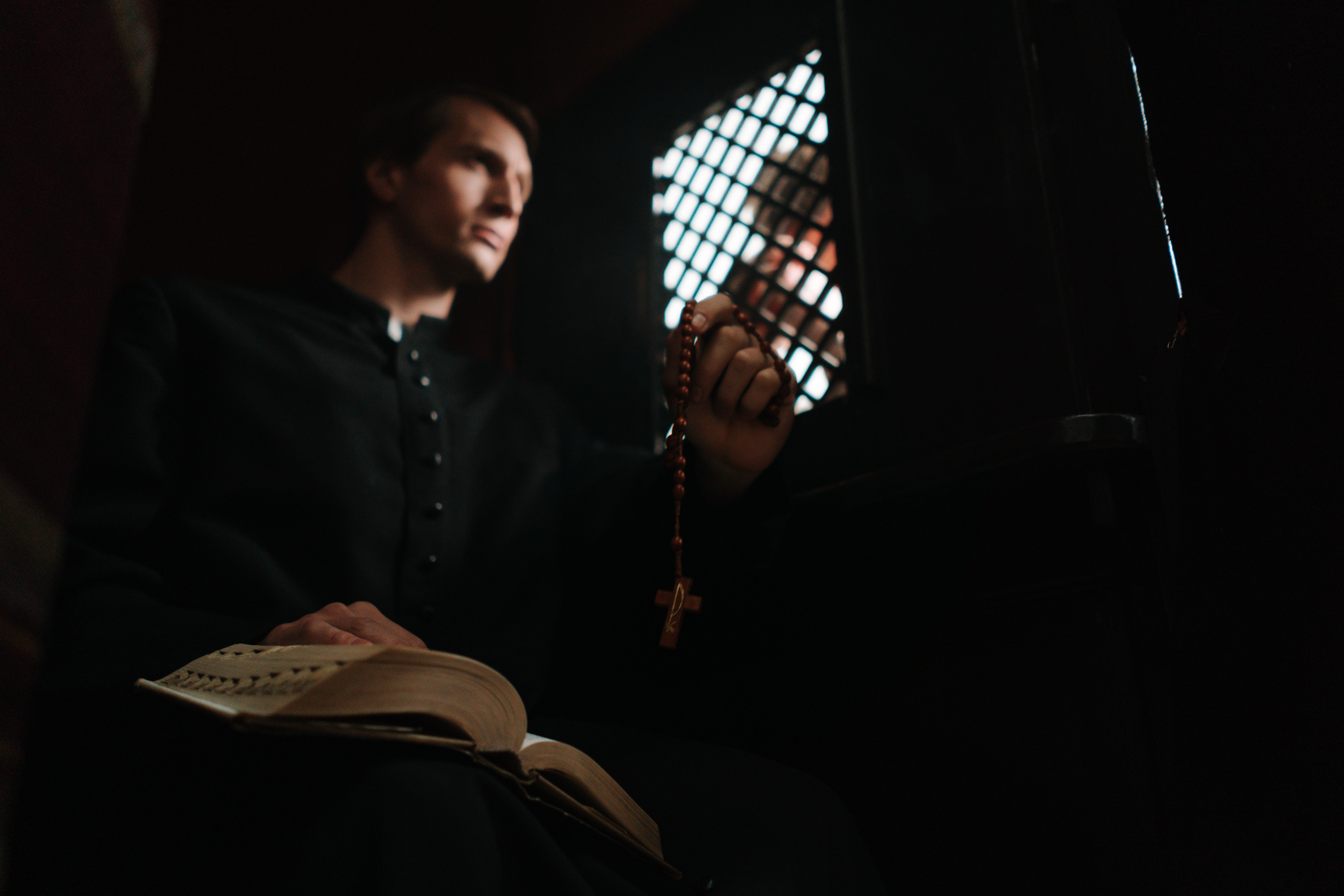
The practice of confession dates back to ancient times. The purpose of this practice was to discourage people from committing sins. Of course, this works only with genuine Christians and other honest people, and therefore only to a very limited extent. By sharing one's thoughts, one is freed from repression. Psychologically, a person feels that the priest will pray to God for their forgiveness. It is with great trust and faith that a Christian confesses to the priest. Normally, there is no face-to-face contact between the priest and the person confessing. The former sits in a confessional, while the latter recounts the sins they have committed.
However, true confession should be a direct and honest affair, undertaken with an intense desire never to sin again. Most importantly, confession should be made to an enlightened being. By emptying oneself before such a being, it is as though one is confessing directly to God Himself. This is because, in the presence of an enlightened being, the individual ego is no longer present; in its place is the vibrant and all-pervading presence of the Divine. By surrendering oneself with the intention of repenting and refraining from further sin, one becomes empty. In such a state, one becomes receptive to the blessing of the enlightened being. Therefore, confession should not be taken lightly, for it is a sacred matter indeed, it may even be considered a form of initiation.
Confession should be a deeply intimate affair. There is no such intimacy between a practitioner and a priest, because the priest is not necessarily an awakened being. The greatest intimacy exists between a master and his disciple. In this respect, confession should not be limited merely to one's sins; rather, it should be a total opening of oneself, in which the disciple shares all of his or her experiences and struggles. It is also a form of psychoanalysis. If the surrender is complete and the disciple empties himself or herself totally, the master can then pour his being into the disciple, bringing about a profound transformation within them.
When a person confesses to a master, the master can also offer the best guidance and show the way towards transcending the mind, so that the person no longer commits sins, because the root of all sins lies in the mind. Therefore, if you feel the need to confess, approach an enlightened being and become his or her disciple. It is deeply unfortunate that, in this day and age, such a jewel among human beings is extremely rare.
Nevertheless, confession is not the only means of being freed from one's sins. There are other ways. But if one chooses to seek recourse through confession, it must be undertaken in the proper manner; otherwise, it is of no benefit. Confession must be accompanied by understanding, repentance, and a firm determination to walk the path of righteousness. These are important virtues that will help a person climb the ladder of spiritual evolution.